AI Data Centres
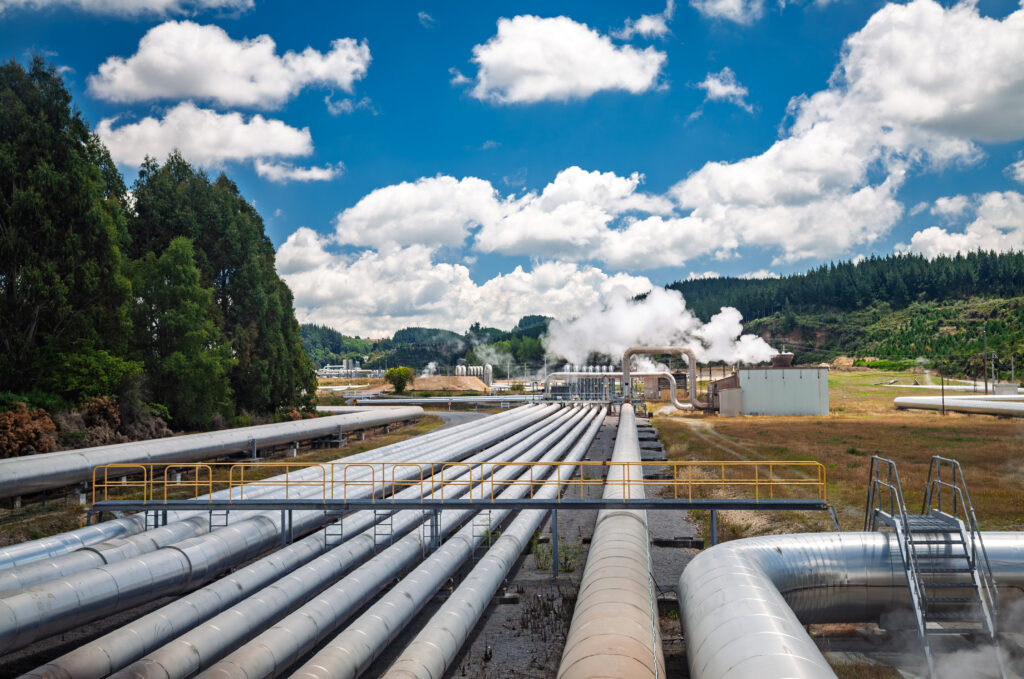
The AI data-centre opportunity in Australia and New Zealand is real. Winners will deliver power, customers and local benefit, not headlines.
- Australia and New Zealand can win AI workloads. First they must deliver competitive power, paying customers and local benefit.
- Announced capacity is not operating capacity. Price the date power reaches a paying customer.
- Export controls and sovereignty laws favour trusted countries like Australia and New Zealand. Qualifying is not winning. Evidence decides.
Artificial intelligence runs on ordinary things: electricity, substations, servers, racks, operational controls, cooling and planning approval. Australia and New Zealand can supply them. The opportunity is large. So is the gap between announcing a campus and running one.
What was actually signed
On 16 September 2026, Dexus confirmed that a consortium of Australian Data Centres, Zerra DC and Macquarie Capital signed lease documents with an Australian subsidiary of Anthropic. The lease covers the first stage of a proposed campus in Queensland's Western Downs. Approvals are still pending.1
Reuters reports a planned campus of 2.16GW, with first facilities from 2027. It will run inference: operating trained AI models, not training them.2
Two common misreadings. The reported development value is not Anthropic's committed investment. And hosting AI services is a different business from training frontier models.
Why AI capital is looking here
The capital at stake is huge. McKinsey estimates AI-ready data centres need about US$5.2 trillion of investment worldwide by 2030, out of US$6.7 trillion for all data centres.11 The question is where it lands.
Two forces are redrawing the AI map. US export controls on advanced chips decide where the most powerful clusters can operate. Data-sovereignty laws in dozens of countries decide where sensitive citizen, financial and defence data can be processed.
Together they push AI computing into trusted, stable, allied countries, not just global hubs. Governments now treat this as national security. Australia and New Zealand qualify.
Site selection is changing too. Liquid-cooled, high-density racks put climate, water and renewable power at the centre. Australia offers grid and fibre scale. New Zealand offers one of the OECD's highest renewable shares. Qualifying is not winning. This article separates the two.
The demand is real, but forecast
The Australian Energy Market Operator (AEMO) forecasts data-centre electricity use in the National Electricity Market:3
Data-centre electricity use, National Electricity Market, AEMO central scenario. Almost seven times today's level by FY2036.
By FY2036, that is about 13% of the market's electricity. The figures include ordinary cloud computing, not just AI. They are scenarios, not contracts.
Power delivery sets value
That is the investor's question. A large site with an uncertain grid connection can be worth less than a small site with firm supply. Renewable potential only has value when generation, transmission and reliable supply meet at a competitive price.
New Zealand's position
New Zealand starts well. Renewables supplied 88.5% of electricity generation in 2025, up from 85.5% in 2024.4 That supports low-carbon computing. But a national average does not guarantee clean power to one site every hour.
New Zealand is not limited to small facilities. Contact Energy and CDC are exploring a 250MW campus at Stratford.5 Datagrid has announced a 140MW power-purchase option with Mercury for its Southland development.6 Both are serious. Neither is operating yet.
Sovereignty and environment need evidence
Five Eyes membership builds trust. It does not approve a sensitive workload. Who controls the software, encryption keys and admin access matters more than where the server sits. New Zealand government guidance requires a risk assessment for every cloud service.7
Liquid cooling is how heat leaves the equipment. It does not decide water use. Closed-loop designs recirculate coolant without evaporating water.8 Developers should disclose real water and power use, including in hot weather.
Policy is tightening
In March 2026 Australia set national expectations for data-centre developers: add clean generation or storage, pay a fair share of network costs and support grid stability.9 In August, National Cabinet agreed to mandatory standards for energy, water and land use, with legislation due in early 2027.10
Expectations today, rules tomorrow. Do not assume early projects will be exempt.
How we assess opportunities like this
Five questions, the same as for any investment.
We have been inside this cycle before.
Colin has spent his career in the software that runs on infrastructure. He started as a software engineer. From 2000 to 2005 he was at Sun Microsystems, whose business then included building data centres across Australia and New Zealand. He led financial services sales across Asia Pacific for Sun ONE, Sun's Java software arm, and later ran its Australasian software business.
At Microsoft he ran the A$100 million-plus Australian Application Platform business, the .NET stack of SQL Server, BizTalk and Visual Studio. Since 2012 he has been CEO of Moroku, which builds digital banks.
John worked the same build cycle from New Zealand, as a director of SolNet, Sun Microsystems' agent in New Zealand, from 1996 to 2003. He then became CEO of Maxnet, a hosted data-centre and IP services provider, through its sale to ASX-listed Vocus Communications in 2012.
Next he led The Network for Learning, the Crown company that built a managed network for more than 2,500 schools and reached its rollout target 18 months ahead of plan. Most recently he was CEO of fibre network operator Tuatahi First Fibre.
Between them, they cover both layers of this market: the infrastructure and the software that makes it pay. We know the gap between a launch and a working system, and we run our own fund platform the same way. In these cycles, returns often go to the companies supplying the build-out, not the headline project. Energy, grid and efficiency technology is where New Zealand's clean-tech base can compete.
Measure what is delivered.
Australia and New Zealand can become major AI computing suppliers. Winners will turn reliable power into services customers pay for, and leave local communities better off.